Thinking about trading a bigger-city pace for more space, easier access to the outdoors, and a small-town setting that still keeps Vancouver and Portland within reach? If Woodland, Washington is on your shortlist, you are probably weighing a few big questions at once: where to focus your home search, what the commute really feels like, and how far your budget may go. This guide breaks down Woodland’s housing patterns, travel realities, and cost considerations so you can make a smart move with fewer surprises. Let’s dive in.
Why Woodland draws relocators
Woodland is a small city of about 6,575 residents that sits at the junction of I-5 and SR 503, roughly 20 miles north of Vancouver. That location makes it a practical option for buyers who want more room than they may find closer to the core Vancouver market while staying connected to the broader Portland-Vancouver corridor.
Woodland also has a distinct layout that matters when you are relocating. The city spans both Cowlitz and Clark counties, and planning authority changes depending on whether a property is inside the city and urban growth area or in surrounding rural lands. In simple terms, the exact parcel location can affect taxes, permitting, utility rules, and school assignment, so it is worth checking those details early in your search, especially if you are looking beyond the in-town core. According to the City of Woodland comprehensive planning documents, those boundaries play a big role in how land is regulated.
Woodland housing costs to expect
If you are trying to estimate your budget, Woodland’s market can look a little different depending on whether you are looking at closed sales or current listings. Redfin’s Woodland market snapshot shows a median sale price of $507,500 and 36 days on market in February 2026, while Realtor.com’s Woodland overview shows a median listing price of $599,930, 95 homes for sale, and a 99-day median on market.
Those numbers are useful together. Closed sales show where buyers and sellers have recently landed, while active listings show what you are likely to encounter as you browse homes today. For many relocating buyers, that means Woodland may offer options across a fairly wide range, but pricing can shift quickly based on lot size, condition, location, and whether a home is in town or on acreage.
Rental options are much tighter. Realtor.com shows only 6 rental listings, and the city’s housing plan reports a 1.4% rental vacancy rate. If you plan to move first and buy later, it is smart to line up temporary housing early rather than assume you will have plenty of short-term choices.
Woodland areas buyers usually compare
For relocation planning, Woodland is often easier to understand by housing pattern than by formal neighborhood name. Most buyers end up comparing three broad search areas.
In-town core homes
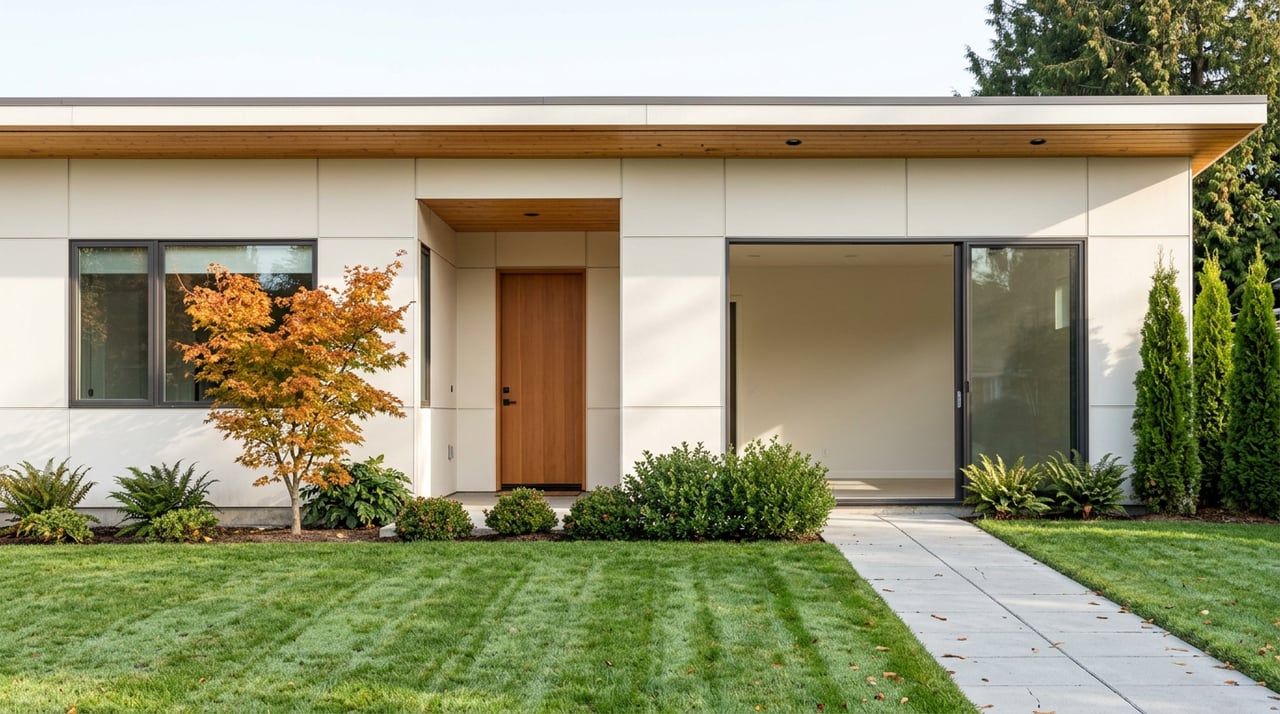
In-town Woodland usually appeals to buyers who want easier access to daily services, public schools, and a more traditional neighborhood layout. Housing here may also feel more straightforward from a utility and access standpoint than some outlying properties.
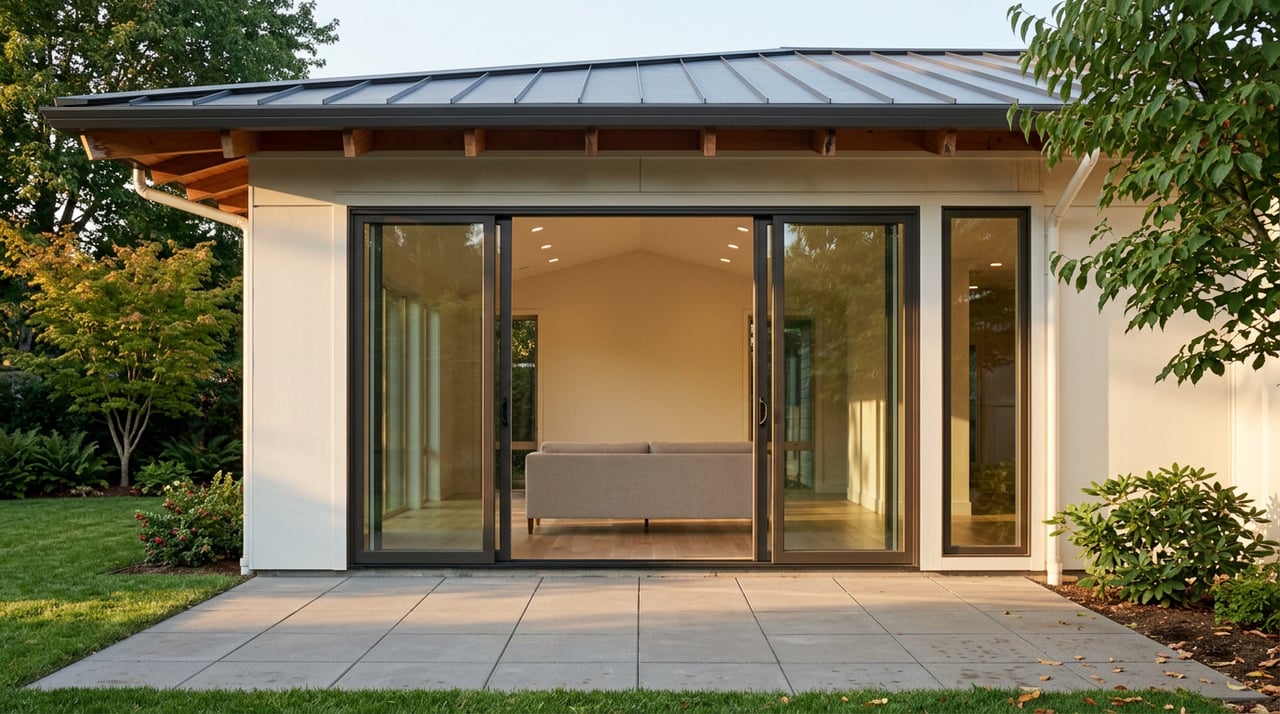
Woodland’s housing stock is relatively newer for a city of its size, with about 57% of units built after 1990, according to Realtor.com’s local overview. If you want a move-in ready home with a neighborhood feel and less land to manage, this category is often the first place to start.
East-side and hill-edge properties
Some buyers are drawn to properties on the east side or near the hill edges because they can offer a different setting and lot profile than the core of town. These homes can be appealing if you want a little more separation, different topography, or a property that feels less compact.
This is also where due diligence becomes more important. Woodland’s planning documents note that much of the city is on a former Columbia River floodplain protected by diking, while the east side remains in the Lewis River floodplain. On edge-of-city properties, you will want to ask clear questions about floodplain location, drainage, slope, and water or wastewater systems before moving forward.
Rural acreage corridors
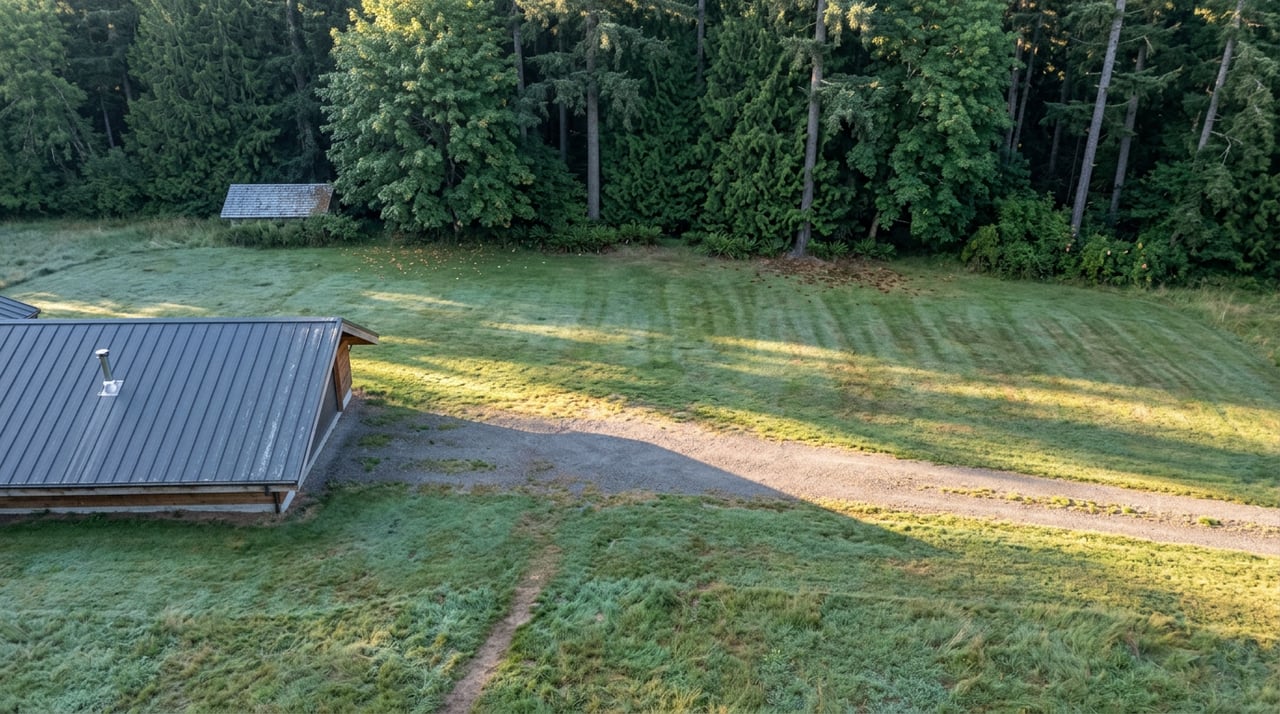
If your goal is land, privacy, shop potential, or a more rural lifestyle, you will likely be looking outside the core. Woodland-area acreage listings commonly appear along roads and corridors such as Buncombe Hollow, Columbia View, Old Pacific Highway, Caples, Cedar Creek, Jordan View, Lost Creek, Pineridge, Skyview, and Whalen, based on the city’s transportation planning context and current land inventory patterns.
These properties can vary widely in price and in what they offer. They may also fall under county oversight rather than city rules, which can affect permitting, septic review, and utility planning. If acreage is on your wish list, it helps to approach Woodland as a market where the land itself is a major part of the value equation, not just the house.
Acreage pricing can swing a lot
One of the biggest relocation mistakes is assuming land prices move in a clean, predictable pattern. In Woodland, the acreage market is thin and varied. Current Zillow land listings for Woodland include examples around $115,000 for 5.06 acres, $140,000 for 5 acres, $260,000 to $279,000 for 10-acre parcels, and $649,000 for 40 acres.
The spread gets even wider when improved or estate-style parcels enter the mix. The research also notes larger and more expensive improved acreage offerings, which suggests that average land pricing can be skewed by premium parcels. For you as a buyer, that means comparable sales and parcel-specific research matter more than broad averages when evaluating land.
Commutes from Woodland to Vancouver and Portland
For many buyers, the main reason Woodland makes the list is commute access. Off-peak, Rome2Rio estimates about 21 minutes to Vancouver over 20.1 miles and about 33 minutes to Portland over 28.9 miles.
That said, off-peak timing is not the full story. Woodland’s own labor-force data supports its commuter role, with only 14% of residents working in the city, while 17.6% work in Vancouver and 9.9% work in Portland. In other words, many residents are making similar drives you may be considering.
Rush hour can be very different. The Washington State Department of Transportation Vancouver region dashboard shows the 8-mile I-205 to Interstate Bridge segment averaged 14 minutes in the 2023 morning peak, with a reliable travel time of 30 minutes. Woodland’s transportation plan also notes that Exit 21 and Exit 22 are the city’s only freeway interchanges, and that queue spillback at Exit 21 can affect I-5 operations.
What this means for your daily drive
If you work in Vancouver or Portland, Woodland can still make sense, but your day-to-day experience will depend on your schedule. Off-peak flexibility can make the location feel very manageable. A strict rush-hour commute, especially if you continue south beyond Vancouver, may feel much longer than the headline mileage suggests.
Before buying, it is worth test-driving your likely route at the actual time you would leave for work and return home. That simple step can tell you more than any online estimate.
Transit options are limited
If you are hoping to rely on public transit for a daily commute, Woodland is a harder fit. The city’s transportation planning documents state that Woodland and its surrounding planning area are not served by a public transit system, with River Cities Transit to the north and C-TRAN to the south.
There is still a practical regional option for some trips. The Lower Columbia Community Action Program offers a rural I-5 connection with stops in Longview, Kalama, Woodland, and Vancouver’s 99th Street Transit Center for $2 each way. Even so, most relocating buyers should plan on Woodland being primarily a car-dependent location.
Schools and move logistics
If school logistics are part of your move, Woodland Public Schools serves about 2,250 students across five traditional public schools: Columbia Elementary, North Fork Elementary, Yale Elementary, Woodland Middle, and Woodland High. The district also operates Lewis River Academy and TEAM High School. You can review official district information, including registration details and assignment resources, on the Woodland Public Schools website.
The district notes that it serves Woodland, Yale, and Cougar families, assigns elementary schools through the registrar, and requires a child to turn 5 by August 31 for kindergarten eligibility. If you are relocating, confirm assignment details directly with the district before closing, especially if you are comparing homes near boundary areas or outside the in-town core.
Key costs beyond the purchase price
When you compare Woodland to other relocation options, look past the list price and think about your full ownership picture. A lower price per square foot can be offset by property-specific costs, especially on acreage or edge-of-city homes.
Here are a few cost areas to review early:
- Floodplain and drainage factors on certain properties
- Water and wastewater setup, especially outside the core
- Septic or onsite sewage oversight in county-regulated areas
- Commute fuel and time costs if you work south of Woodland
- Temporary housing costs if you need to rent before buying
The market conditions also support a practical pace. With 95 active listings and a 99-day median on market for active inventory, buyers may have time to compare options. Still, that does not mean you should skip financing prep, inspections, or property-specific research.
Smart relocation tips for Woodland buyers
If you want to make a smoother move, focus on preparation in the areas where Woodland is most unique.
Start with your lifestyle priorities
Ask yourself whether you want convenience, land, or a middle ground. In-town homes, edge properties, and rural acreage all offer different tradeoffs in commute feel, maintenance, and utility complexity.
Verify the parcel details early
Because Woodland spans two counties and includes both city and rural contexts, it is important to confirm where a property sits from a planning and oversight standpoint. That can influence taxes, permitting, utilities, and other ownership details.
Do not skip property-specific inspections
On acreage or edge-of-city properties, inspection questions should go beyond the home itself. Floodplain status, drainage, stormwater issues, and wastewater systems are all worth careful review.
Plan temporary housing ahead of time
If your move will not line up perfectly with a purchase, make backup plans early. Woodland’s rental supply is limited, and waiting too long could leave you with fewer options.
Is Woodland a good fit for you?
Woodland can be a strong fit if you want more space, a smaller-city setting, and access to the I-5 corridor without being in the middle of Vancouver. It is especially appealing for buyers who are open to a commuter lifestyle and want to stretch into a newer home, a larger lot, or even acreage.
The key is going in with clear expectations. Woodland is not a plug-and-play suburb in every section of town. Location inside the market matters, commute timing matters, and on some properties, land and utility due diligence matter just as much as the home itself.
If you are weighing a move to Woodland or comparing it with other Southwest Washington options, working with a local team can help you narrow the right area, pressure-test the commute, and spot the details that are easy to miss online. When you are ready to talk through your move, connect with Parker Home Group for clear guidance and personalized support.
FAQs
What is the average home price in Woodland WA?
- Recent market snapshots show a median sale price of $507,500 and a median listing price of $599,930, depending on whether you are looking at sold homes or active listings.
How far is Woodland WA from Vancouver and Portland?
- Off-peak estimates show about 21 minutes to Vancouver and 33 minutes to Portland, but rush-hour traffic can make the drive significantly longer.
What parts of Woodland WA do most buyers consider?
- Most buyers compare in-town core homes, east-side or hill-edge properties, and rural acreage corridors rather than focusing only on formal neighborhood names.
Are there many rental homes in Woodland WA?
- Rental inventory is limited, with 6 rental listings noted in the research and a reported 1.4% rental vacancy rate, so temporary housing should be planned early.
What should buyers check on acreage properties in Woodland WA?
- Buyers should closely review floodplain location, drainage, water and wastewater systems, and septic or onsite sewage oversight before buying acreage or edge-of-city properties.
Does Woodland WA have public transit to Vancouver?
- Woodland is not broadly served by a public transit system, but the Lower Columbia Community Action Program offers a rural I-5 connection with a stop in Woodland and service to Vancouver’s 99th Street Transit Center.